
Most slow hiring is not slow because people are lazy. It is slow because a job post goes out vague, 200 CVs arrive in an inbox, someone reads the first thirty carefully and skims the rest, and nobody can say where a given candidate currently is. Speed and quality both suffer for the same reason: no structure.
This post walks through a practical way to hire faster while keeping quality, using AI where it genuinely helps and keeping people in charge where it matters.
Start with a structured job description
Everything downstream depends on this step. A ranking can only be as good as the definition of “good” you give it.
A structured job description separates things that are often mixed together in a paragraph of prose:
- Must-have skills (the ones without which the person cannot do the job).
- Nice-to-have skills (a tiebreaker, not a filter).
- Experience level and the kind of experience that counts.
- Location and work arrangement.
- Responsibilities, written as outcomes rather than a wish list.
Tip: Write the must-have list first and keep it to five items or fewer. If everything is “must-have”, nothing is, and the ranking cannot tell your best candidates from your merely adequate ones.
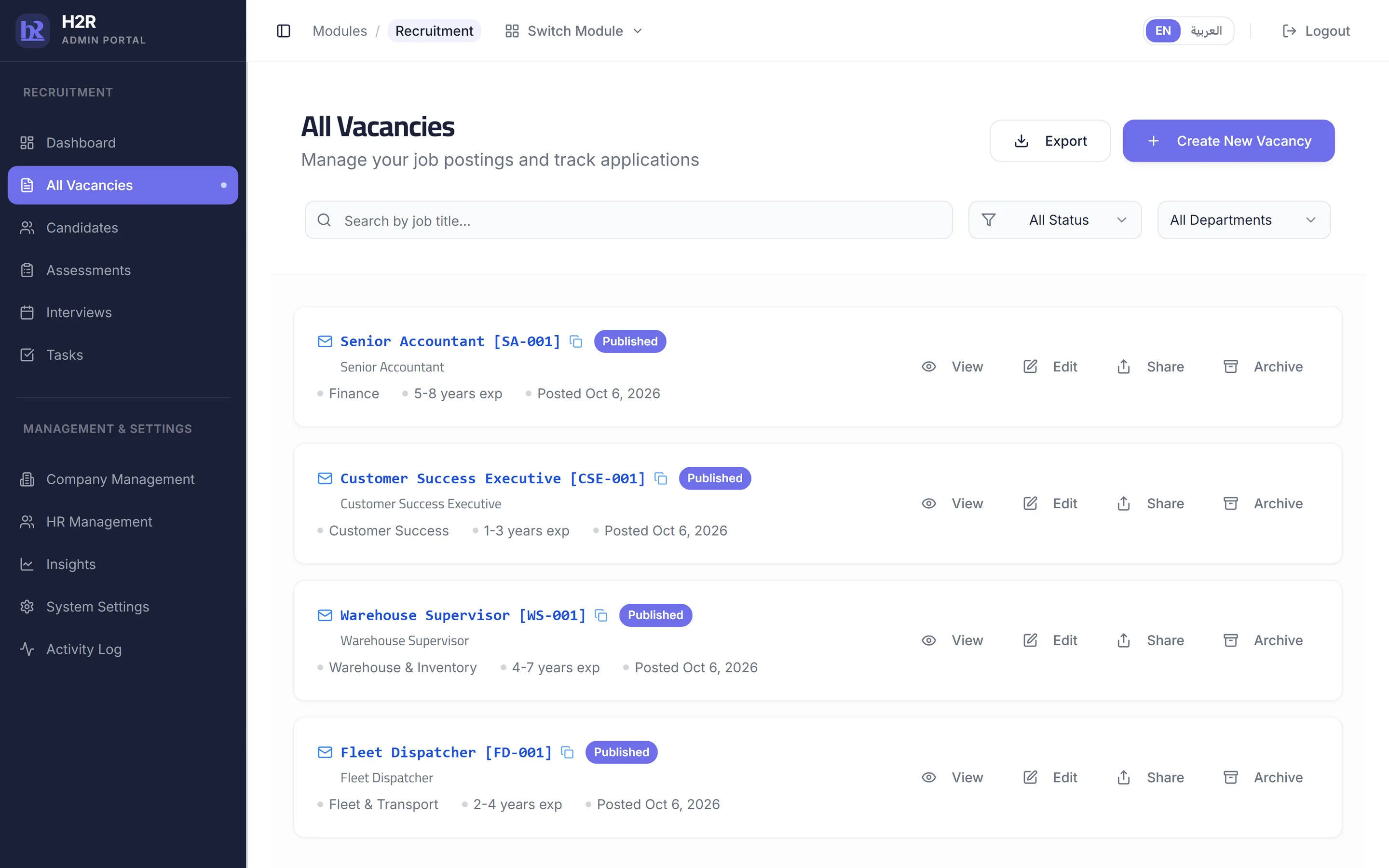
In H2R Recruitment you create the job from these structured fields, and the same fields drive how candidates are later matched.
What CV parsing, ranking and matching actually do
It helps to be precise about what the AI does, because the honest answer is smaller than the hype and still very useful.
- Parsing reads a CV (often a PDF with an unpredictable layout) and pulls out structured information: name, contact details, roles, skills, education. This replaces retyping and makes CVs comparable.
- Matching and ranking compares each parsed profile with the structured job description and produces an ordering, so the candidates who appear closest to your requirements come first.
- Assessments and interviews: AI can help prepare assessment questions and interview material, so your team does not start from a blank page.
What it does not do:
- It does not know your company culture or the context behind a career break.
- It cannot judge motivation, honesty or how someone works in a team.
- It does not make the decision. A person does.
You can see how this looks in practice in review and rank candidates.
Bias and fairness: review the ranking, never auto-reject
Any system that ranks people deserves caution. A ranking reflects the job description and the data in the CVs, and both can carry blind spots. A CV that is poorly formatted, written in a different style, or from a less typical background may rank lower even though the person is strong.
Some rules we recommend to every hiring team:
- Treat the ranking as a reading order, not a pass/fail line. Decide up front how deep you will read, for example every candidate in the top group plus a sample from below it.
- Never auto-reject based on a score. A rejection should always be a human choice made after looking at the person.
- Check the job description for unnecessary requirements. A degree, a specific city or a number of years that is not truly needed narrows the pool and skews results.
- Look at who is being filtered out. If your shortlists are consistently similar, ask whether the requirements are the reason.
- Keep a reason for every rejection. It protects candidates and helps you improve the job description next time.
Important: H2R ranks and suggests. People on your team decide who moves forward, who is interviewed and who is hired. Please keep it that way in your own process too.
Interviews and assessments that tell you something
CV screening narrows the field; it cannot tell you whether someone can actually do the work. Add two things after the shortlist:
- A short, relevant assessment. Choose it to mirror a real task from the job. Keep it brief, and tell candidates what to expect. See assessments.
- A structured interview. Ask every candidate the same core questions and score the answers against the same criteria, so you compare people rather than impressions. See schedule interviews.
Two interviewers scoring independently before they talk is better than one person with a strong gut feeling.
A pipeline that shows where candidates wait
The biggest hidden cost in hiring is waiting. A candidate sits for nine days in “interview scheduled” because no one confirmed a time, and by the time you call, they have accepted another offer.
A visible pipeline makes that waiting obvious. When each candidate sits in a clear stage (applied, shortlisted, interview, assessment, offer), the questions get easy:
- Which stage has the most people stuck in it?
- Who has been in the same stage longer than a week?
- Which jobs have no candidates at all in the interview stage?
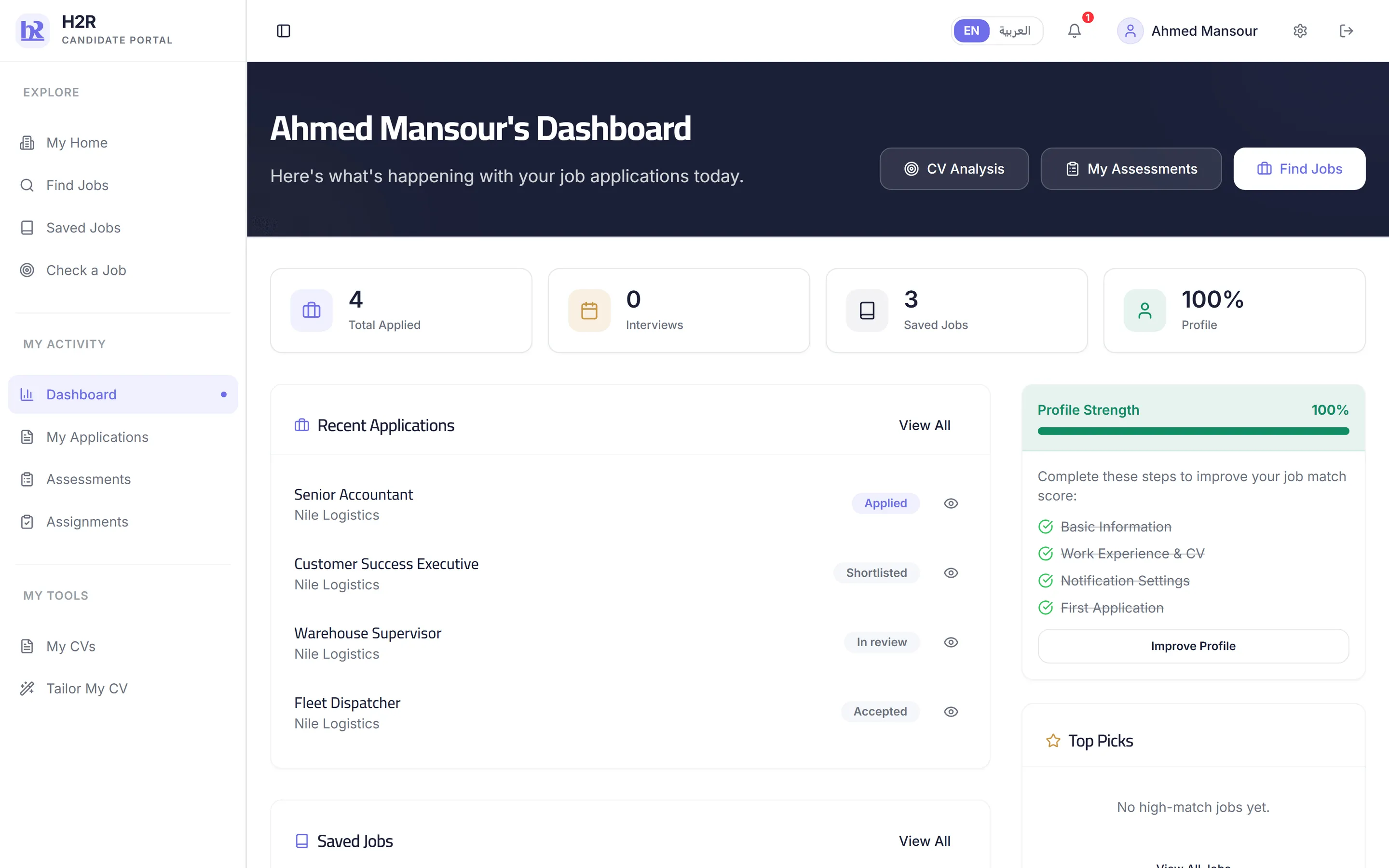
Candidates also benefit from knowing where they stand. A candidate portal lets them follow their application rather than writing to ask.
A simple weekly rhythm
You do not need a complicated process. This one works for most small and mid-sized teams:
- Monday: review new applicants in ranked order, shortlist or decline with a note.
- Tuesday: book interviews for everyone shortlisted, ideally within two working days of shortlisting.
- Midweek: run interviews and send assessments.
- Friday: look at the pipeline, find anyone waiting too long, and clear the oldest items first.
Common mistakes
- Vague job descriptions. Garbage in, garbage ranked.
- Treating the score as the answer. It is a place to start reading.
- No owner for each stage. Every stage needs a named person responsible for moving candidates along.
- Skipping feedback. Even a short note on why someone was declined makes the next round better.
- Ignoring the offer step. Prepare the offer while the final interviews are still happening; good candidates do not wait.
From accepted candidate to employee
Once someone accepts, retyping their details into your HR records is wasted effort and a source of mistakes. In H2R, accepted candidates become employees, so their information carries across into the employee record when you onboard them.
Faster hiring is mostly about removing waiting and noise, not about cutting corners on judgment. Structure the job, use AI to sort the reading order, and keep your people in the decisions.
Questions people ask
Does the AI decide who gets hired?
No. AI parses and ranks CVs and helps with assessments and interviews, but the people on your hiring team make every decision, including who moves forward and who is rejected.
Should I reject candidates below a certain score?
We recommend against it. Use the ranking to decide where to look first, then review the candidates yourself. A ranking is a starting order, not a verdict.
What makes the ranking better?
A clear, structured job description. The more precisely you define must-have skills, experience and location, the more useful the match will be.